 how-to
How to Verify If Your Property Has ADU Easements
Last Updated: October 31, 2026
Quick Summary
To verify if your property has ADU easements, pull your deed and plat map from the county recorder, request a title report, call 811 for a free utility locate, ask the planning department for your zoning file, and hire a licensed surveyor to map the easement onto your lot lines. The surveyor step is the one people skip, and it settles arguments. Trust recorded documents, not the seller's disclosure.
- ADU easements are recorded rights of use, not ownership, so you still hold the deed.
- Utility easements are the most common blocker for backyard cottage projects.
- Title report easements appear in Schedule B of your title commitment.
- Building over an easement usually requires written permission from the holder.
- When records conflict, call the county recorder first, then the easement holder.
Table of Contents
- What ADU Easements Are and Why They Block Projects
- How to Find Easements on Your Property: A Five-Step Check
- Reading an Easement on a Property Survey
- Title Report Easements: What the Paperwork Reveals
- Can You Build an ADU Over an Easement?
- Who to Call When the Records Conflict
- Ordering Permit-Ready ADU Plans With Easements Cleared
- Frequently Asked Questions
What ADU Easements Are and Why They Block Projects
ADU easements are legal rights that let someone else use a strip of your land, even though you own it. That right can stop a backyard cottage cold, and most homeowners don't learn about it until the permit office says no. On tight lots, a design can be sound and the budget can be sound, yet a utility easement running across the only buildable corner can still stop the plan.
An easement is a recorded right of use, not ownership. The utility, neighbor, or city holds the right; you hold the deed. You still mow that strip of grass. You just can't put a foundation on it.
Easement Types That Most Often Affect an ADU Build
- Utility easements: Water, sewer, power, and gas lines. The most common blocker by far.
- Drainage easements: Carries stormwater across your lot. Often wide and easy to miss.
- Access easements: A neighbor's right to cross your land to reach theirs.
- Conservation easements: Limits what can be built, sometimes permanently.
Each one carries different rules. A utility easement usually bans permanent structures. A drainage easement may allow a deck but not a slab. The details live in the recorded document, not in your memory of what the seller said.
For lots with several overlapping constraints, our guide to an ADU feasibility study for tight lots walks through the full evaluation.
How to Find Easements on Your Property: A Five-Step Check
Finding easements takes about a week of digging, and the paper trail matters more than anything a neighbor tells you. Work through these five steps in order.
- Pull your deed and plat map from the county recorder's office.
- Request a title report from your title company or a new title search.
- Call 811 for a free utility locate before you plan any digging.
- Ask the local planning department for your zoning file and any recorded conditions.
- Hire a licensed surveyor to map the easement onto your lot lines.
Step five is the one people skip. It's also the one that settles arguments.
A common mistake is trusting the seller's disclosure alone. Disclosures list what the seller knows, not what's recorded. Those are different documents with different legal weight.
Work through these five steps in order to trace every recorded easement on your lot. For a professional property verification report that surfaces easements and encumbrances on your lot, QuiPlans offers a dedicated service.
| Step | What to do | Source |
|---|---|---|
| 1 | Pull deed and plat map | County recorder's office |
| 2 | Request a title report | Title company or new title search |
| 3 | Call 811 for a free utility locate | 811 service |
| 4 | Ask for zoning file and recorded conditions | Local planning department |
| 5 | Hire a licensed surveyor to map easements | Licensed surveyor |
Reading an Easement on a Property Survey
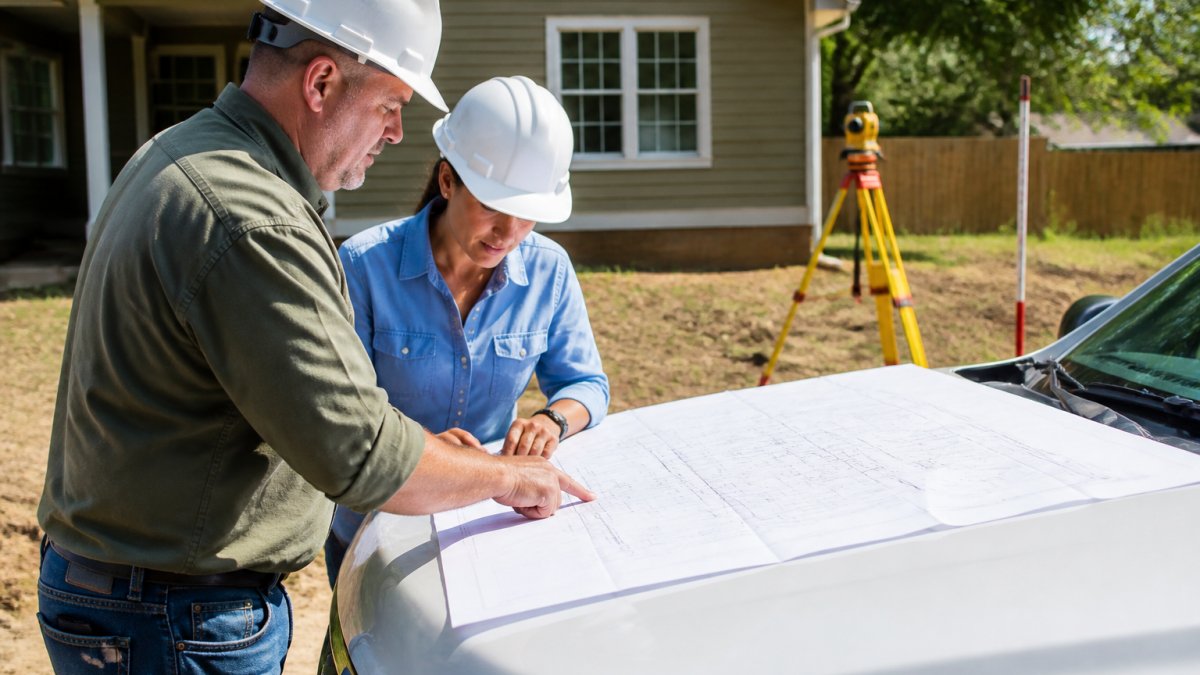
An easement on a property survey shows up as a dashed or shaded strip labeled with its purpose, width, and recording number. That label is the whole game. It tells you what the strip is for, how wide it runs, and which document created it. Should the recorded details reveal an error or an outdated restriction that prevents your project, you may need to challenge a property deed to clear the path for your development.
Look for three things on the survey:
- The width in feet. A 5-foot strip is annoying. A 20-foot strip can erase your buildable area.
- The recording reference. This points to the exact page in the county records.
- The purpose label. "Drainage" and "utility" carry different restrictions.
Surveys also show building setback lines. Those interact with easements in ways that surprise people, so check our guide on how to verify ADU setback requirements before you sketch anything.
Title Report Easements: What the Paperwork Reveals
Title report easements are the recorded encumbrances listed in Schedule B of your title commitment. Schedule B is the section most buyers skim past. It's also where every easement on your lot gets named.
Read each Schedule B item and note the recording number. Then pull the actual document. The title report tells you an easement exists; the document tells you what it prohibits.
What most guides miss is that title reports can carry old easements nobody uses anymore. An abandoned utility easement may still appear on paper. Whether it can be removed depends on state law and whether the holder formally released it. That's a question for a real estate attorney, not a search engine.
Can You Build an ADU Over an Easement?
The short answer: usually not, and never without written permission. Building over an easement risks forced removal at your expense if the holder ever needs access.
Some easements allow encroachment with a written agreement. Utility companies sometimes grant this for minor overhangs like roof eaves or a small deck. They rarely allow a foundation, and they almost never allow a sleeping unit.
Three factors decide it:
- The easement language. Some documents ban all structures; others ban only permanent ones.
- The holder's willingness. A utility may negotiate. A drainage easement tied to a flood path usually won't.
- Local code. Many building departments require a clear separation between structures and easement lines.
If you're also working against a height cap, our walkthrough on verifying ADU height restrictions covers how those limits stack with easement boundaries.
Watch out: building first and asking later is the single most expensive mistake here. Removal orders come with the holder's costs added to yours.
Who to Call When the Records Conflict
When the records conflict, call the county recorder first, then the easement holder, then a real estate attorney. Each one resolves a different kind of conflict.
- County recorder: Confirms which document is the latest recorded version.
- Easement holder: The utility or agency that owns the right. They can clarify scope and release options.
- Local planning department: Explains how the easement affects your permit application.
- Real estate attorney: Handles quiet title actions or release negotiations.
Conflicts usually come from old surveys, unrecorded agreements, or a utility that moved a line without updating the plat. The county recorder records search guidance from the National Association of Counties can point you to the right local office. For utility locate requests, the 811 Call Before You Dig service is free and required in most states before digging.
Ordering Permit-Ready ADU Plans With Easements Cleared
Once the easement picture is clear, the design work gets simpler. You know where you can build, how wide the clear zone is, and which documents the plan reviewer will want to see.
QuiPlans provides permit-ready ADU plans with PE-stamped drawings from licensed structural engineers in 26 U.S. states, and its feasibility studies can help identify constraints before you commit to a design. Trusted by over 7,000 homeowners.
If you are unsure what is recorded against your lot, a licensed title professional or surveyor can help. When the easements are resolved and the design is set, QuiPlans permit-ready plans are available on the QuiPlans pricing page for current pricing and options.
Frequently Asked Questions
How do I find out if my property has an easement?
Start with the title report you received at closing, which lists recorded easements by book and page. Then pull the plat map or subdivision map from your county recorder's office and compare the easement description to your lot lines. A licensed surveyor can mark the easement's actual location on the ground. If the title report is silent but neighbors mention a utility corridor, call the utility company directly, since some easements are held by prescription or unrecorded agreement and only surface through a full title search.
Does a property survey show easements?
A boundary survey shows lot lines and improvements; an ALTA survey or a survey with a title comment goes further and plots recorded easements onto the drawing. Ask the surveyor in writing to show all easements of record and any visible utility improvements. If the survey was done years ago, check whether it predates a recent utility installation. An easement on a property survey is only as current as the records the surveyor pulled, so confirm the date and the title company used.
Can you build an ADU over an easement?
Usually not without the easement holder's written consent, and sometimes not at all. A structure placed inside a utility easement can be removed at the holder's expense to you if repairs are needed. Some jurisdictions may allow structures within certain easements under a recorded agreement with the easement holder. Verify with the easement holder and your local building department before you commit to a design, since the answer varies by easement type and city.
Who can confirm whether an easement affects my ADU plans?
Three parties together give you a reliable answer: a title company officer who reads the recorded documents, a licensed land surveyor who locates the easement on your lot, and your local planning or building department who applies zoning setbacks. For structural questions about building near or over an easement, a licensed structural engineer can review the plans and note where footings or foundations conflict. Keep written responses from each, since permit reviewers often ask for documentation of easement consent.
Easement surprises are the most common reason an ADU project stalls after the design is done. QuiPlans takes the guesswork out of that step with feasibility studies, PE-stamped drawings from licensed structural engineers in 26 states, and instant downloads so your timeline stays on track. Get started with QuiPlans and build on ground you know is clear.