 ultimate-guide
ADU Construction Loan Requirements Explained
Quick Summary
An adu construction loan is a short-term financing product that pays for building a new accessory dwelling unit, usually drawn in stages as work is completed. Approval depends on your credit, verifiable income, debt-to-income ratio, home equity and the project plan and contractor.
- Lenders check credit history, verifiable income and debt-to-income ratio before reviewing the project.
- Loan-to-value is calculated against the property's appraised value, so home equity plays a central role.
- Gather two years of tax returns, recent pay stubs and two to three months of bank statements.
- The project package needs plans, permits, a line-item budget with contingency, and a construction schedule.
- Lenders often expect cash injection and reserves beyond the down payment, so confirm exact figures with each lender.
Table of Contents
- What an ADU Construction Loan Covers and How It Differs From a Mortgage
- Core ADU Loan Requirements: Credit, Income and Debt-to-Income
- Loan-to-Value, Home Equity and Appraised Value Rules
- ADU Construction Loan Documents Checklist: Plans, Permits and Contractor Contracts
- How Much Down Payment You Need for an ADU Construction Loan
- Using an ADU Loan Calculator to Estimate Payments and Total Costs
- Next Step: Assembling Your Loan Package Before You Apply
- Frequently Asked Questions
ADU construction loans follow different rules than a standard mortgage, and the requirements for credit, income, equity and paperwork often catch first-time borrowers off guard. This guide walks through what lenders typically look for before approving an accessory dwelling unit build, so you can prepare your application before you talk to a bank.
An ADU construction loan is a short-term financing product that pays for building a new unit on your property, typically drawn in stages as work is completed.
What an ADU Construction Loan Covers and How It Differs From a Mortgage
Accessory dwelling units are secondary homes built on the same lot as an existing house, such as backyard cottages, garage conversions or basement suites. An ADU construction loan funds the design, permitting, materials and labor for that new unit.
A standard mortgage buys a finished home. A construction loan pays for work still underway, which means the lender is taking more risk until the unit is complete.
Core ADU Loan Requirements: Credit, Income and Debt-to-Income
Lenders start with the borrower. They look at credit history, verifiable income and existing debts before they consider the project itself. Each factor affects how much you can borrow and at what terms.
Credit Score Expectations
Credit requirements vary by lender and program, so there is no single minimum that applies everywhere. In general, a stronger credit history improves your options and can lower your rate. Review your reports for errors before applying, and address late payments or high card balances where you can, since these are among the first things underwriters check.
Income Verification and Debt-to-Income Ratio
Expect to document income with recent pay stubs, tax returns and bank statements. Lenders compare your monthly debt payments to your gross monthly income, a figure known as the debt-to-income ratio. A lower ratio signals that you can carry the new loan payment alongside your existing obligations. Self-employed borrowers typically need a longer income history and additional tax documentation.
Loan-to-Value, Home Equity and Appraised Value Rules
Loan-to-value (LTV) compares the loan amount to the value of the property. Construction lenders generally cap LTV at a set percentage, and the appraised value used may be the current value or a projected value after the ADU is built.
Some borrowers combine financing sources. Many homeowners rely on home equity loans, home equity lines of credit or cash-out refinancing alongside or instead of a dedicated construction loan, according to research from the Terner Center for Housing Innovation's analysis of ADU construction financing.
ADU Construction Loan Documents Checklist: Plans, Permits and Contractor Contracts
Most ADU construction loan applications move through the same broad stages, and the paperwork requirements follow those stages. Knowing which document belongs to which stage prevents the common pattern of submitting an incomplete package and waiting weeks for a request for more information.

Stage 1: Pre-Application Financial File
Before the lender reviews the project, it needs a complete picture of you as a borrower. Gather:
- Two years of federal tax returns, with all schedules, especially if you are self-employed or receive rental or investment income
- Recent pay stubs covering the last 30 days, or profit-and-loss statements and business bank statements for self-employed borrowers
- Two to three months of statements for checking, savings and any retirement accounts you plan to reference
- A current mortgage statement and the most recent property tax bill
- A signed authorization allowing the lender to pull your credit
Underwriters use these to calculate your debt-to-income ratio and confirm the cash you will bring to the project. Gaps in the income history are the most frequent reason a file stalls at this stage.
Stage 2: Project Package
The project package shows the lender what will be built, what it will cost, and who is building it.
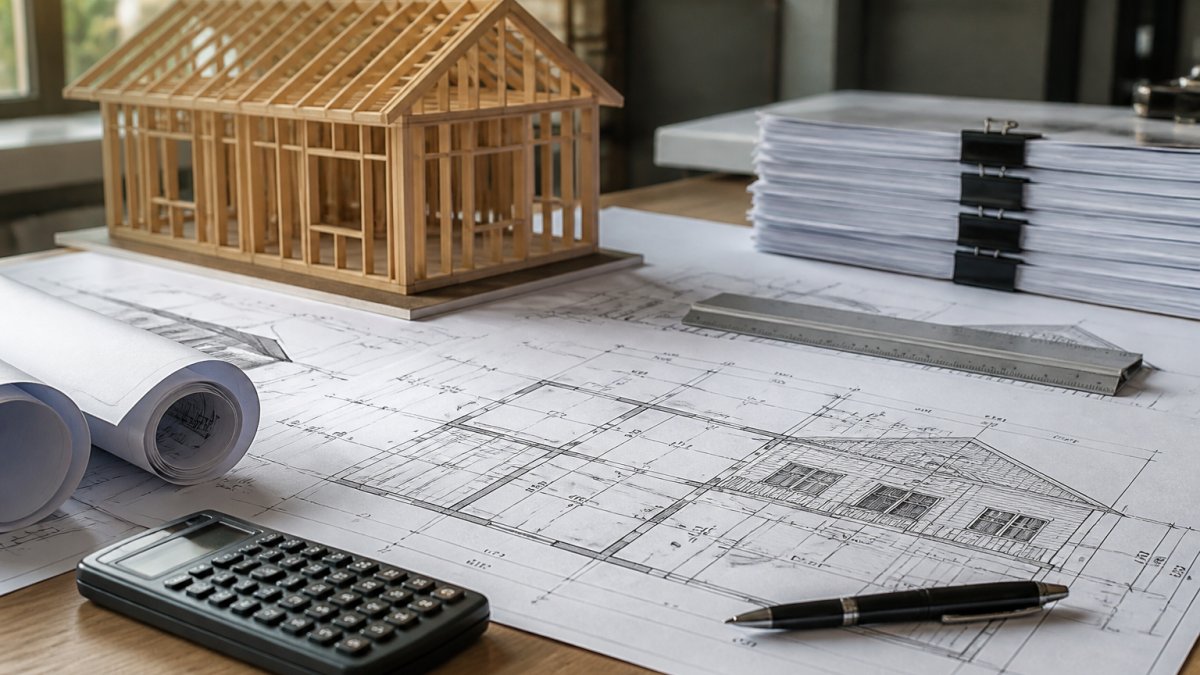
- Architectural or floor plans, with elevations and a site plan showing the ADU's placement, setbacks and utility connections
- Engineering drawings stamped by a licensed professional where your local building department requires them, typically covering foundation, structural framing and any change in the existing house
- Building permit applications and any zoning approvals, or written confirmation that a permit application is pending
- A line-item construction budget that separates hard costs (materials and labor), soft costs (design, permits, fees) and a contingency reserve
- A written construction schedule with phases, since the lender will use it to plan draw timing
Watch out: a budget with no contingency line, or one that lumps site work, utility hookups and impact fees into a single figure, often prompts the lender to request a revised estimate before approving the loan. Separating those costs and documenting a realistic contingency can also clarify which parts of the project need financing, while allvalley considerations may help frame the broader backyard renovation budget.
Stage 3: Contractor Documentation
Lenders generally want the builder vetted before closing. Expect to provide:
- A signed contract with a licensed general contractor, including the scope of work, payment schedule tied to milestones, and the total contract price
- Proof of the contractor's state license and active general liability and workers' compensation insurance, along with a certificate naming the lender as additional insured where applicable
- Subcontractor lists for major trades, if the lender requests them
- Confirmation of any prior ADU or residential projects the contractor has completed, which some lenders review when a borrower is building a unit for the first time
A fixed-price contract simplifies the draw process. A cost-plus contract requires more frequent invoice review and can slow each disbursement.
Stage 4: Closing Items
Once the underwriter approves the file, the final items usually include a homeowner's insurance policy with builder's risk coverage during construction, a title search confirming no unexpected liens, and a signed loan agreement that describes the draw conditions.
The paperwork a lender expects falls into four stages, and knowing which document belongs to each stage keeps the application from stalling.
| Stage | Key documents | Common pitfall |
|---|---|---|
| 1. Pre-application financial file | Two years of tax returns, recent pay stubs, bank statements | Gaps in income history |
| 2. Project package | Plans, engineering drawings, permits, line-item budget, schedule | Budget with no contingency line |
| 3. Contractor documentation | Signed contract, state license, insurance certificates | Cost-plus contract slows draws |
| 4. Closing items | Homeowner's insurance with builder's risk, title search, loan agreement | Insurance not reflecting new structure |
How Much Down Payment You Need for an ADU Construction Loan
In construction lending, the term "down payment" is used loosely. Lenders more often ask how much of the project you are funding from your own resources, and how much equity you have in the existing home, than for a fixed cash percentage of a purchase price. Understanding both measures explains most of the variation between lenders.
Equity as Your Contribution
If you already own the home, your equity often substitutes for a traditional down payment. Lenders estimate it by subtracting the existing mortgage balance from the current appraised value. That equity then supports the loan through the loan-to-value calculation described above. A borrower with substantial equity may need little or no additional cash at closing, while a borrower with a small equity position may be asked to contribute cash to cover the difference.
Cash Injection and Project Costs
Some programs require the borrower to inject cash, sometimes called a cash-in requirement, before the lender releases the first draw. This cash typically covers soft costs such as design, engineering and permit fees, or the portion of the budget that falls before the lender's first disbursement. Lenders usually verify this injection with bank statements, so funds moved shortly before application may need a clear paper trail.
Reserves Beyond the Down Payment
Even when the down payment requirement is met, lenders commonly look for reserves: liquid assets sufficient to cover several months of loan payments or to absorb cost overruns. A common pattern is to expect reserves equal to a set percentage of the total loan amount, held in accessible accounts.
Because specific percentages and reserve rules differ by lender and program and change over time, confirm the exact figures in writing with each lender before you compare offers.
Using an ADU Loan Calculator to Estimate Payments and Total Costs
An ADU loan calculator helps you model monthly payments, interest during construction and the total cost of borrowing. Enter the loan amount, interest rate, draw period and repayment term, then compare scenarios. Build in a contingency for unexpected costs, since construction budgets commonly grow during a build. For a broader view of project expenses, QuiPlans publishes guidance on typical ADU budgeting factors to help you plan beyond the loan itself.
Next Step: Assembling Your Loan Package Before You Apply
Start by pulling your credit reports, calculating your debt-to-income ratio and listing your available equity. Then assemble the plans, permits and contractor documents above into one folder. With that package ready, your lender conversation becomes a review of terms rather than a scramble for paperwork. Confirm current requirements with your lender before you commit to a build.
Frequently Asked Questions
What type of loan is best for an ADU?
The best option depends on your equity, credit and how the project will be paid for. A dedicated construction loan converts to permanent financing or pays out in draws during building, while a home equity loan or HELOC can fund the project if you already have substantial equity in your home. Cash-out refinancing is another common route. Some homeowners finance ADUs by combining cash with existing mortgage products such as home equity loans or cash-out refinancing. Compare total cost, draw requirements and repayment terms before choosing.
Do I need 20% down for an ADU construction loan?
Not necessarily. Lenders usually measure the loan against property value through loan-to-value (LTV) limits, and maximum LTV thresholds vary by lender and program. That means the borrower's equity in the home often matters more than a fixed 20% down payment. Some programs also require cash reserves or contingency funds for overruns. Confirm the exact requirement with your lender, since terms vary by program and property.
What credit score do I need for an ADU construction loan?
Credit score requirements vary by lender and loan type, so there is no single universal minimum. Lenders also review income, debt-to-income ratio and property equity alongside your score. A stronger score generally improves your rate options and approval odds. Before applying, pull your credit reports, correct errors and reduce revolving balances where possible. Ask each lender for its specific minimum score and how it treats your existing mortgage and any new construction debt.
What documents do lenders require for an ADU construction loan?
Lenders typically ask for proof of income, tax returns, bank statements, credit authorization and property information. For construction financing they also commonly require detailed plans and specifications, a construction budget, a signed contractor contract and evidence of building permits or zoning review. Some programs require an appraisal of the existing or future value. Having a complete package ready speeds underwriting and helps you compare offers accurately.
Can I use my home equity to finance an ADU?
Yes. Many homeowners fund an ADU with a home equity loan, a home equity line of credit (HELOC) or a cash-out refinance. Each draws on the equity in your home, so lenders will look at your combined loan-to-value ratio, which includes your existing mortgage plus the new borrowing. A HELOC offers flexible draws during construction, while a fixed home equity loan gives predictable payments. Compare interest rates, closing costs and repayment terms before deciding.
Do lenders require approved ADU plans and permits before funding?
Many lenders expect detailed plans and a clear path to permits before releasing funds, because the loan depends on the project being buildable as designed. Approved or permit-ready drawings, along with a construction budget and contractor agreement, strengthen an application. Some lenders disburse money in stages tied to inspections, so the project must match the plans. Confirm with your lender which plan stage and permit status they require, since requirements differ by program and jurisdiction.